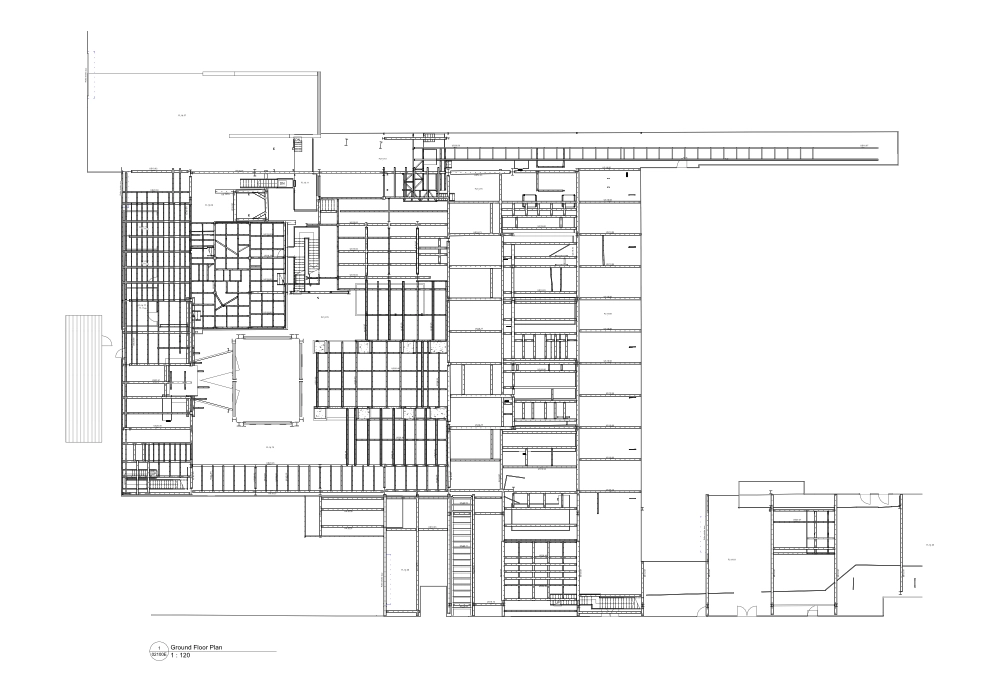
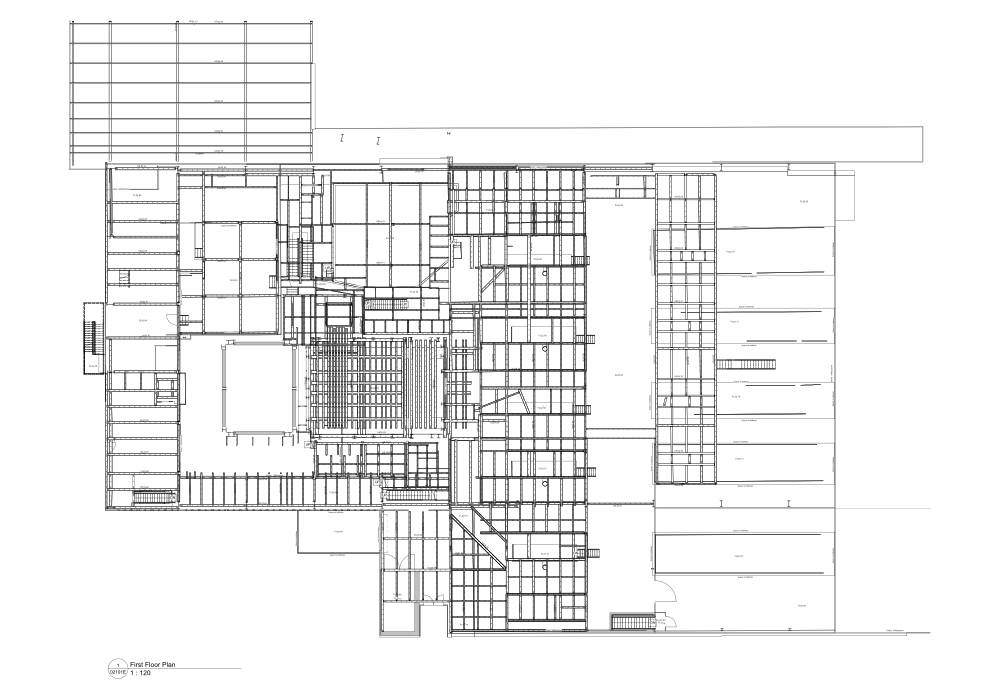
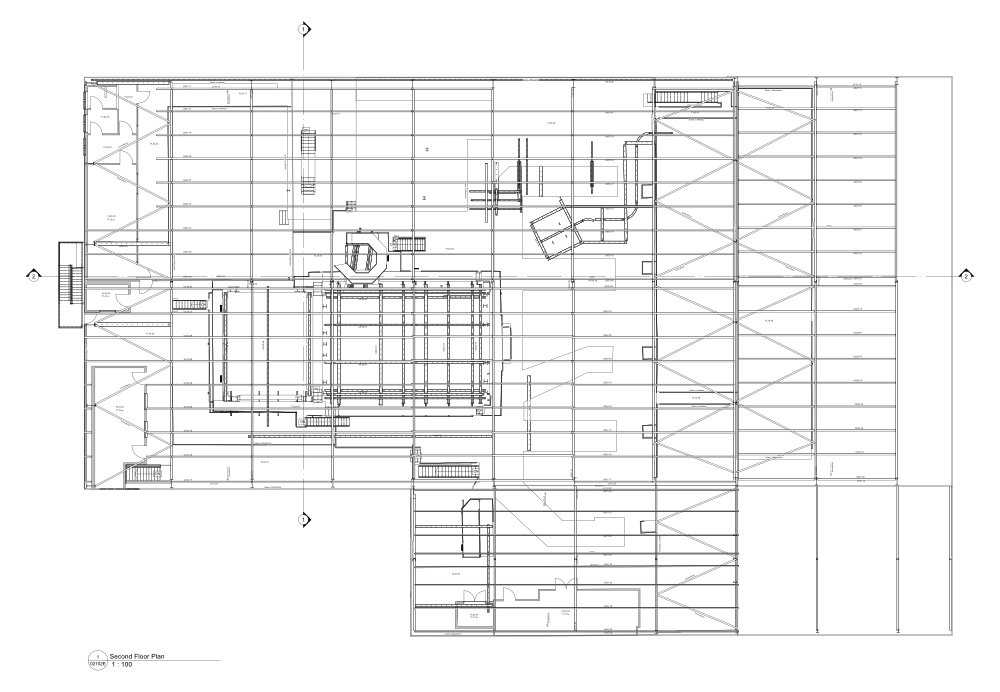
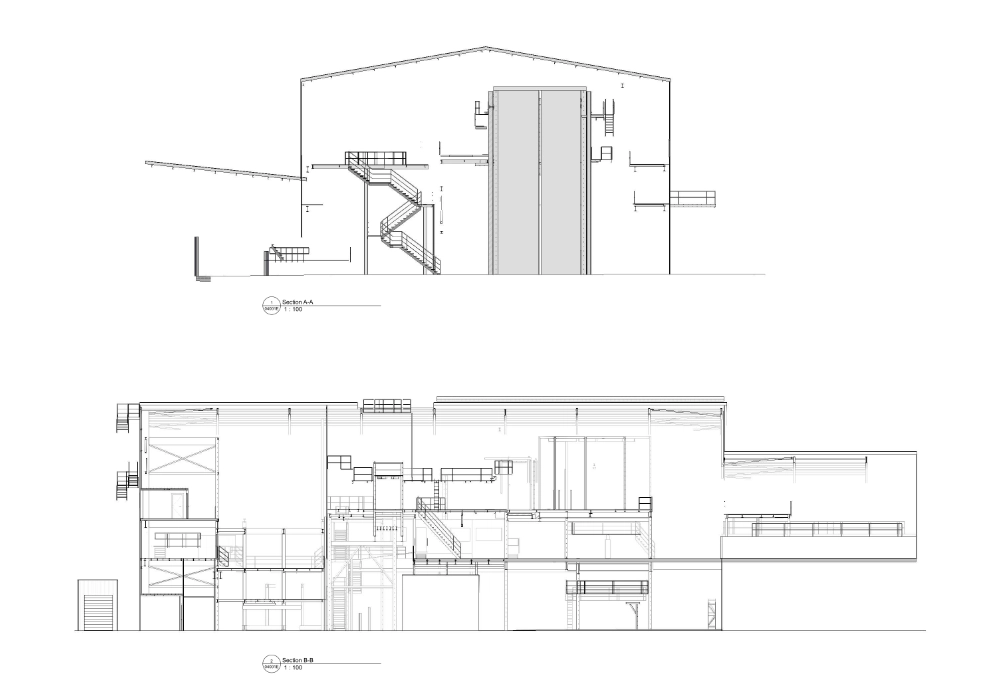
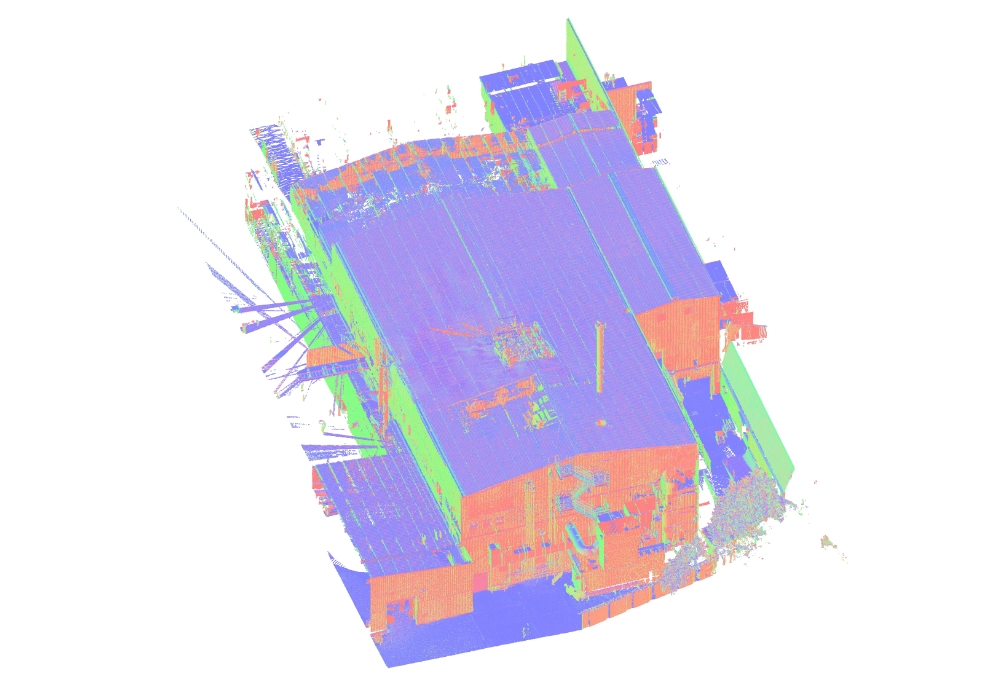
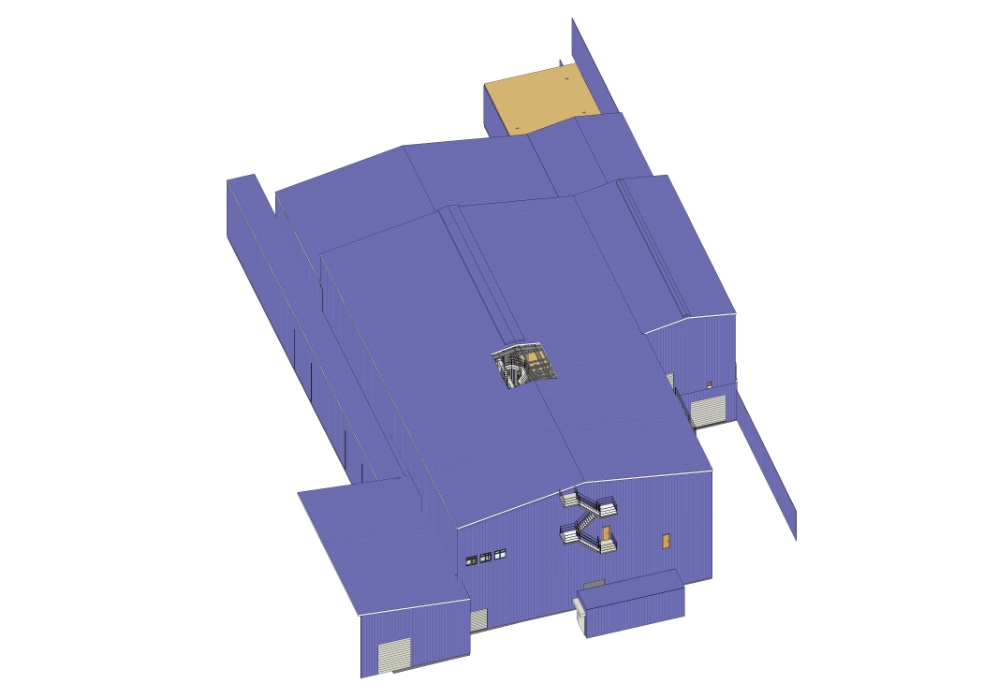
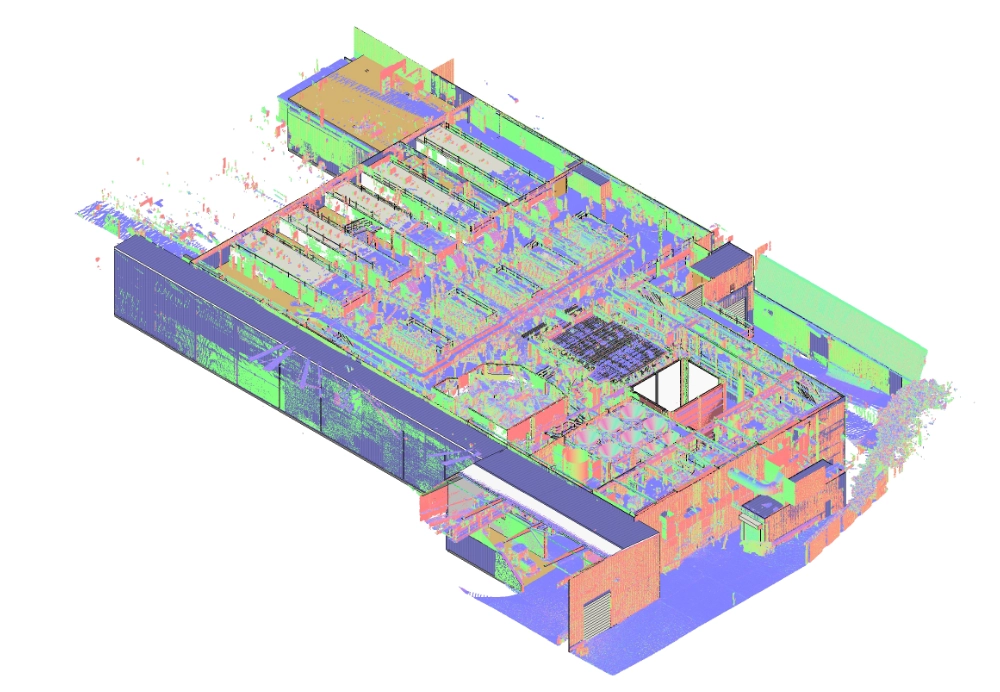
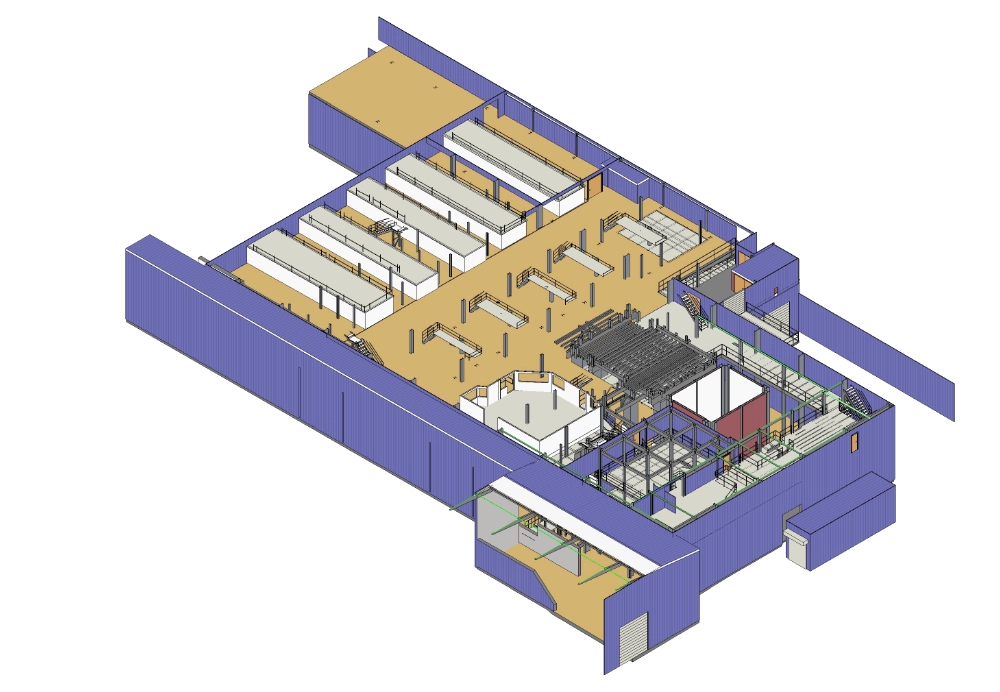
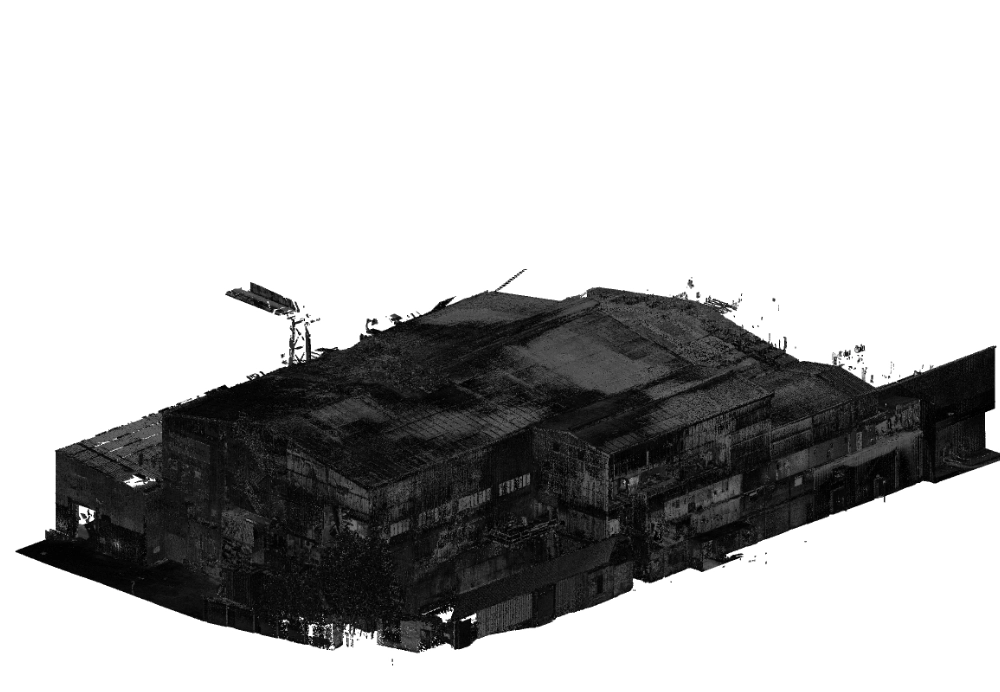
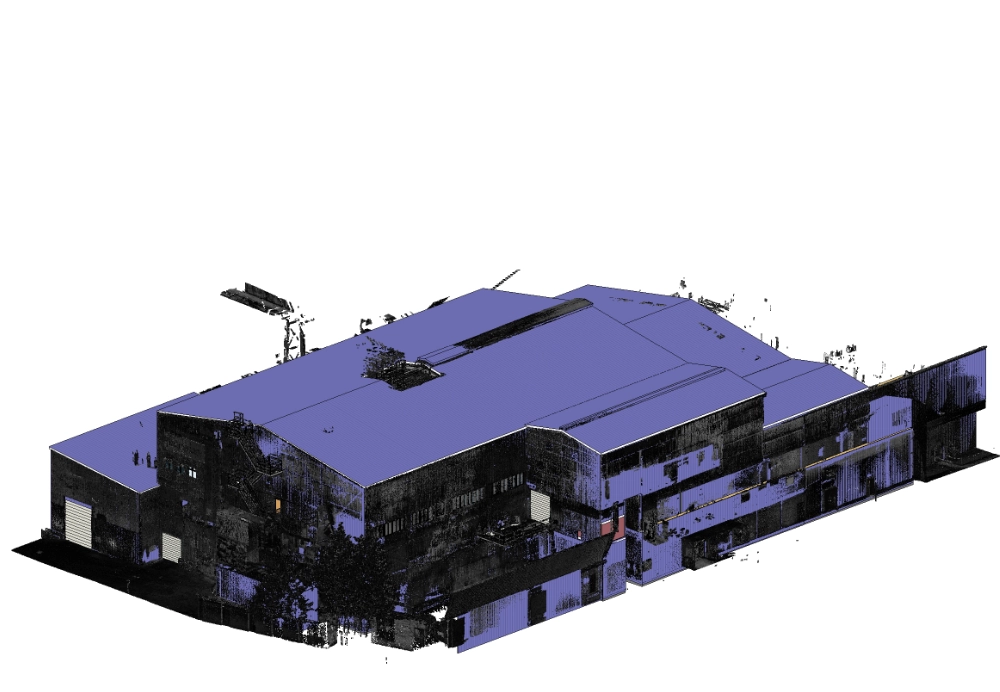
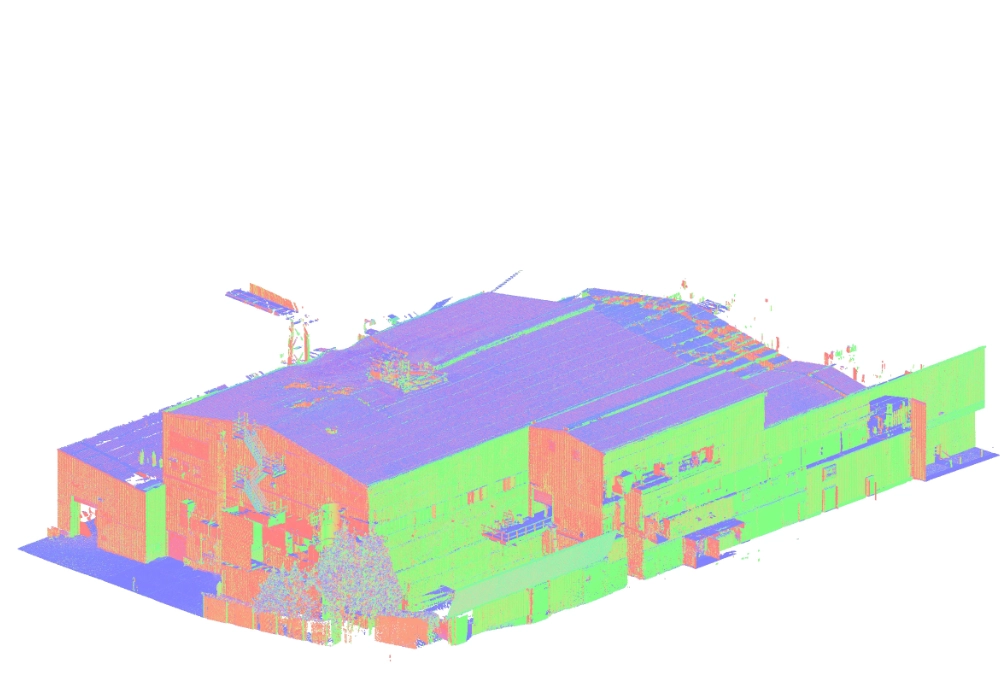
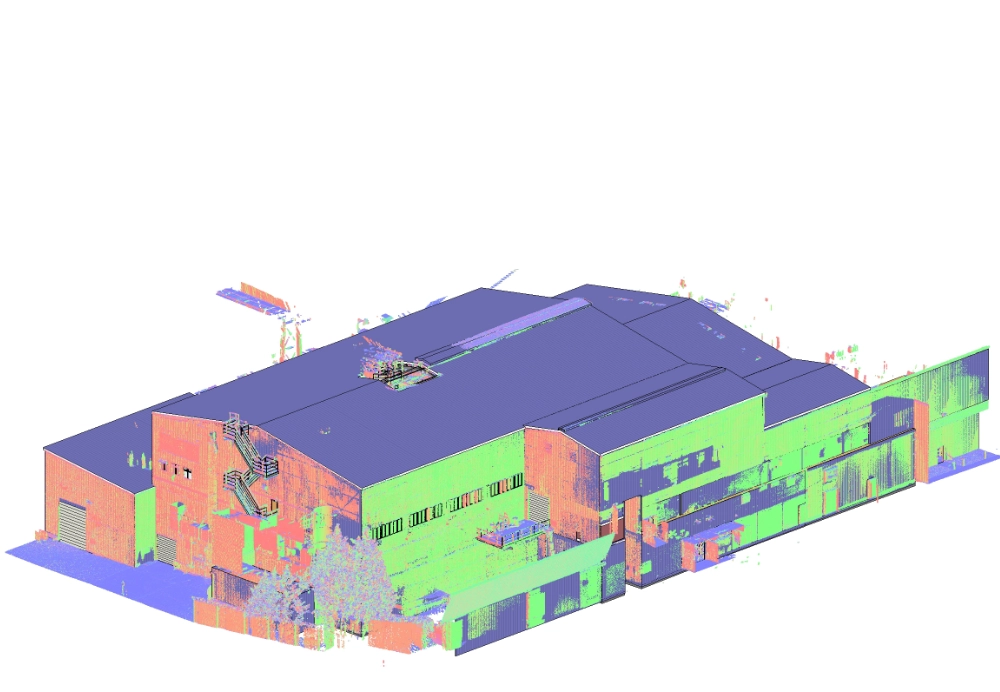
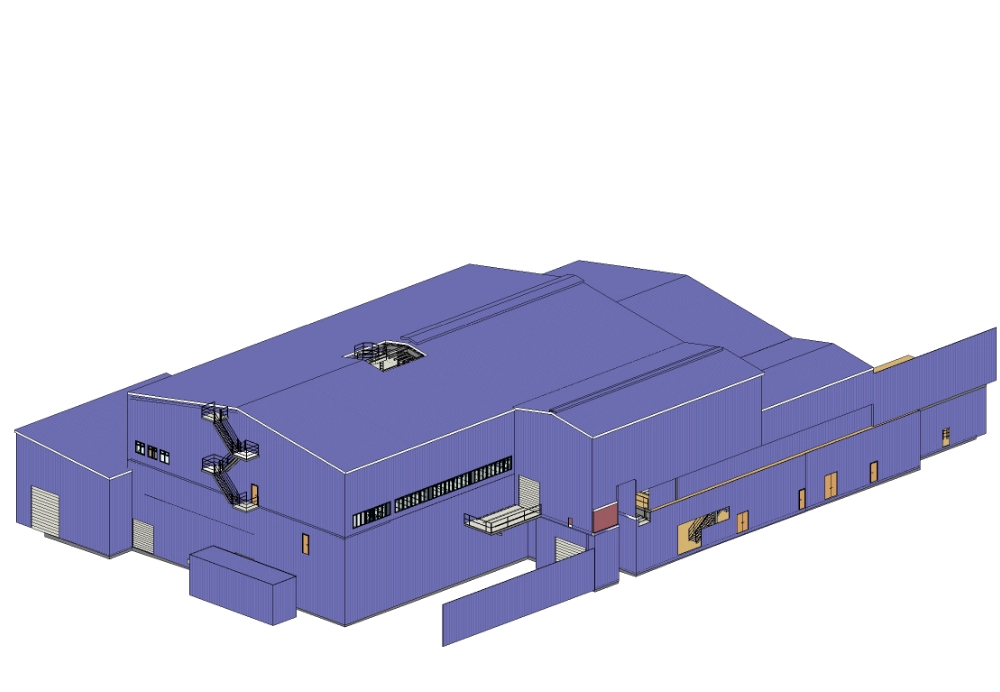
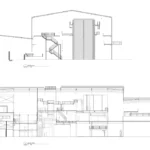
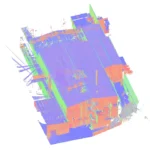
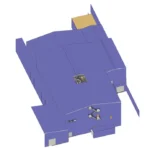
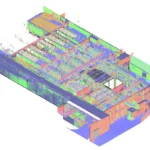
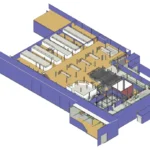
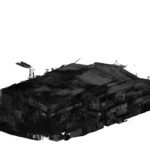
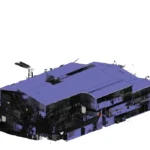
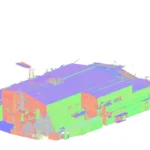
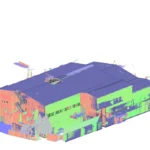
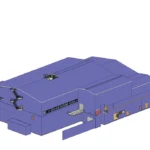
This project involved a full Scan to BIM workflow for a 400,000 sq ft glass manufacturing facility that had experienced significant fire damage. The primary objective was to develop a detailed, survey-grade BIM model to support the client’s restoration planning and structural analysis. The scope required comprehensive documentation and modelling of the building’s structural framework, ensuring that every critical element was captured with high precision.
Equipment Used
Laser Scanner RTC360
Leica GNSS Receiver GS14
Leica Total Station TS16
Duration
Site time: 2-3 days
Modelling time: 15 days
1. Structural Modelling
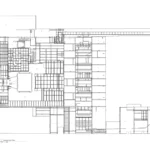
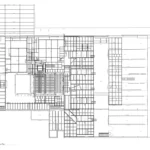
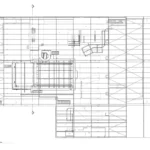
Using point cloud data as the basis, the team modelled all major structural components, including walls, beams, columns, joists, purlins, staircases, and roof decks. The scale of the site required careful coordination to maintain consistency across thousands of interconnected elements. Each structural member was modelled to reflect its exact position, alignment, and condition, forming a reliable digital representation of the fire-affected facility.
2. Technical Challenges
One of the key challenges was ensuring the complete and accurate capture of every beam, joist, and brace within the vast structural network. Any omission could impact the integrity of the model and affect subsequent engineering analysis. To mitigate this, the team implemented rigorous quality-control checkpoints throughout the workflow, enabling early identification of gaps or misalignments. Modular modelling techniques were adopted to streamline production and maintain accuracy across repetitive structural zones.
Equipment Used
Laser Scanner RTC360
Leica GNSS Receiver GS14
Leica Total Station TS16
Duration
Site time: 2-3 days
Modelling time: 15 days
Deliverables
Despite the complexity and size of the facility, the project was completed within an accelerated 21-day timeframe.
This rapid turnaround was achieved through disciplined workflow management, continuous QA/QC processes, and effective coordination across the modelling team. The result was a fully detailed, survey-grade BIM model that met all client requirements and established a new benchmark for large-scale industrial Scan to BIM projects.